

Beverage Trends among Gen Z and Younger Millennials: How Brands Can Stay Ahead
Updated: June, 2026
Published: March, 2025
Understanding the non-alcoholic beverage preferences of young consumers is essential for brands looking to connect with Gen Z and younger millennials (15-30 year olds). The beverage choices of this generation reflect a balanced approach, as they seek beverages that not only satisfy their cravings but also align with their values and lifestyle. For young consumers in 2026, what they drink increasingly reflects their health goals and values - a cultural shift, not a passing trend. This article explores the key factors influencing youth beverage decisions, providing insights into the latest trends that shape their consumption habits.
Unless otherwise noted, data in this article reflects Wave 5 of our Youth Pulse Study (Q1 2026), covering 15–30 year olds. Some sections draw on Wave 3 (Q3 2024), which covered a slightly narrower age group of 15–27 year olds, where those questions were not repeated in later research waves.
Youth’s Thirst for Health: Main Concerns When Choosing Beverages
Health is an important element in beverage choices for Gen Z and younger millennials in 2026. When choosing non-alcoholic beverages, sugar content is the primary concern for 40% of youth, followed by calorie count (23%) and the presence of artificial ingredients (17%). This drives demand for healthier, low-sugar, and natural drink options.
Primary Health Concerns When Choosing Non-Alcoholic Beverages
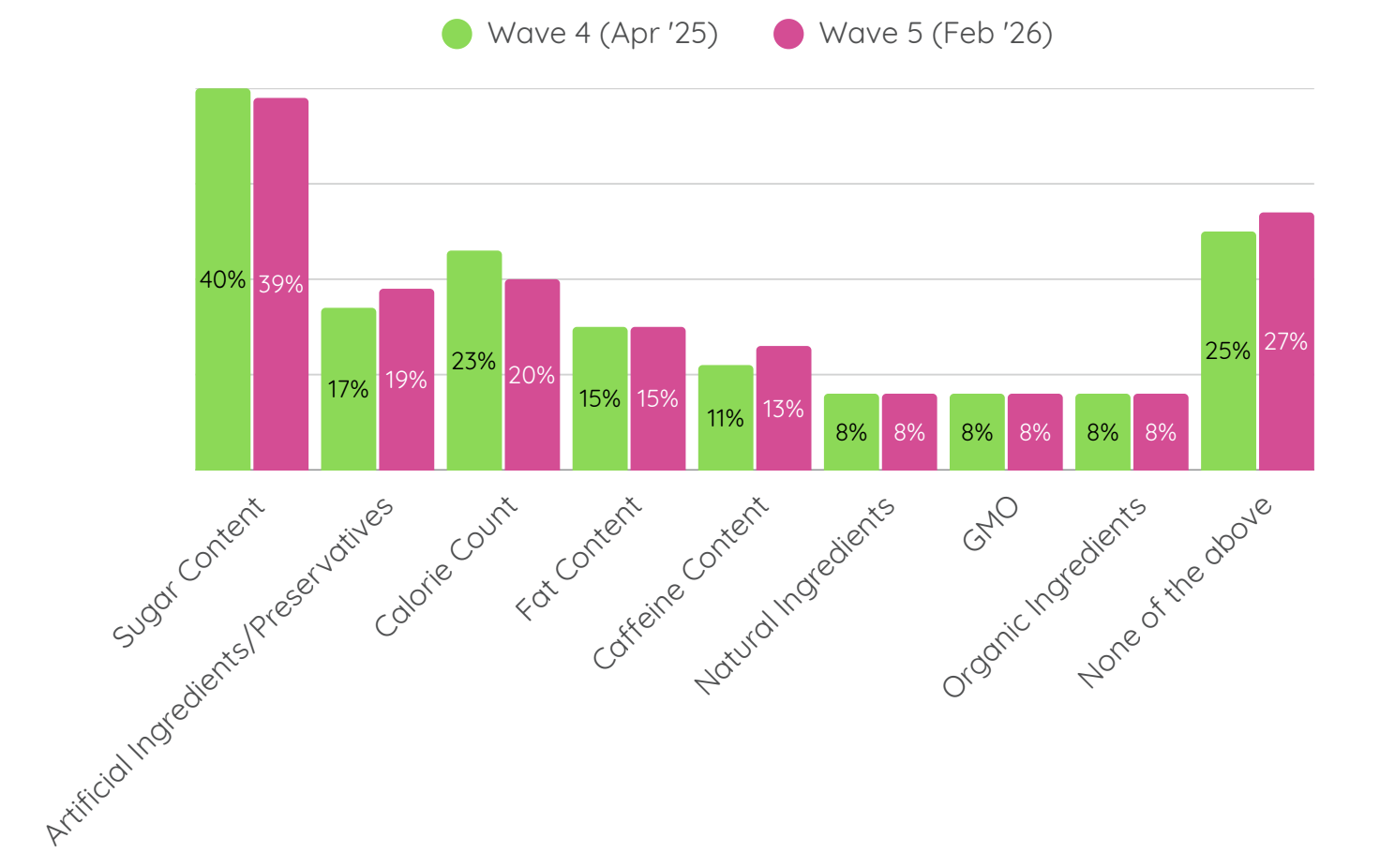
Graph: Opeepl Youth Pulse Study, Waves 4-5 (Q2 2025 – Q1 2026)
Beyond Taste: Top Factors Shaping Young Consumers' Beverage Choices
Our research revealed that taste (63%) and price (48%) play a major role in young consumers’ beverage choices, as affordability and flavour remain top priorities. Beyond that, 21% buy beverages based on their nutritional content, such as low sugar, reduced calories or added vitamins. Additionally, 16% prioritise brand reputation, favouring companies that align with their values. Convenience is another key consideration, with 14% opting for single-serve or convenient packaging. Meanwhile, 13% of young consumers specifically seek beverages made with organic or natural ingredients (Opeepl Youth Pulse Study Wave 3, Q3 2024).
10 Beverage Trends to Watch in 2026
To spot relevant trends among youth in the non-alcoholic beverages category, half of the respondents in the study were asked an open-ended question: 'What new trend in the non-alcoholic beverages category have you noticed recently that you think will become increasingly important for consumers?’. The open-ended responses were grouped to find patterns or small-but-growing ideas that kept emerging.
The other half of respondents were asked to rank the identified re-emerging trends: ‘Which trend do you think will matter most to people when choosing non-alcoholic beverages in the future?’
The trends were ranked 1–5, where 1 = Highest Rank, 5 = Lowest Rank.

Youth are rejecting sugar and artificial sweeteners — but they're not giving up sweetness. Instead, they're demanding beverages that are naturally sweetened, such as with stevia.

Rise of non-alcoholic beverages that serve as substitutes for traditional alcoholic drinks such as beer, cocktails, wine, liquors or spirits.

Young consumers are turning to beverages with specific functional outcomes beyond refreshment, like energy, focus, gut support, often with added ingredients/actives.

Beverage choices shaped by affordability, promotions, and inflation pressure: youth are seeking best value rather than premium features.

A broad shift toward beverages perceived as healthier daily choices due to "natural", "low in sugar", "wellness", "lactose-free" cues.

Rapid rise of specific beverage types becoming "the drink of the moment" (e.g., kombucha, matcha, iced coffee) as recognisable, fashionable staples.

Beverage choices driven by social platforms: viral drinks, influencer recommendations, challenges, or "Instagrammable/TikTok" formats.

Preference for packaging that reduces environmental impact through less plastic, better recyclability, or improved sourcing/material choices.

Youth are demanding broader variety and the ability to choose based on personal tastes, diets, or occasions. More formats, more types, more niches.

Flavours like lychee, mango, passionfruit, guava, and calamansi are gaining traction. Youth are seeking new flavour experiences and global tastes.
Ranked 1–5, 1 = Highest Rank, 5 = Lowest Rank. Source: Opeepl Youth Pulse Study, Wave 5 (Q1 2026).
Based on 2,500 interviews with 15–30 year olds. Get the complete beverage findings. Download the full report.
A Growing Demand for Functional and Fortified Drinks
Looking more closely at the functional drinks trend, the research highlights a growing demand for beverages with added health benefits. Today's youth want drinks that do more than quench thirst - they want beverages that support energy, skin health, immunity, or digestion.
Key preferences among Gen Z and younger millennials include:
43% want more beverages with added vitamins (+3 pp since Wave 4 in 2025)
26% would like to see more mineral-enhancedoptions (+3 pp since Wave 4)
22% prefer more drinks enriched with protein (-1 pp since Wave 4)
12% would like to find more beverage options with added collagen (-3 pp since Wave 4)
12% would like to see more beverages with antioxidants (-1 pp since Wave 4)
11% are interested in drinks with added probiotics (-1 pp since Wave 4)
Emerging trends in functional beverages show increasing interest in options that offer additional health benefits, reflecting youth's focus on physical wellness. A smoothie isn't "just a smoothie" anymore - functional beverages are becoming a lifestyle staple.
Beyond Water: Daily Go-To Beverages
Beyond water, juice and soda are go-to beverages among young consumers. 72% of youth drink juice, while 68% drink soda at least once a month, with 15% consuming these beverages daily. Coffee, however, ranks as the number one for daily consumption, with 26% of young consumers drinking it every day. These preferences highlight youth's desire for variety in their beverage choices, balancing functional and health-driven options with flavourful drinks.
Most Popular Non-Alcoholic Beverages among Youth
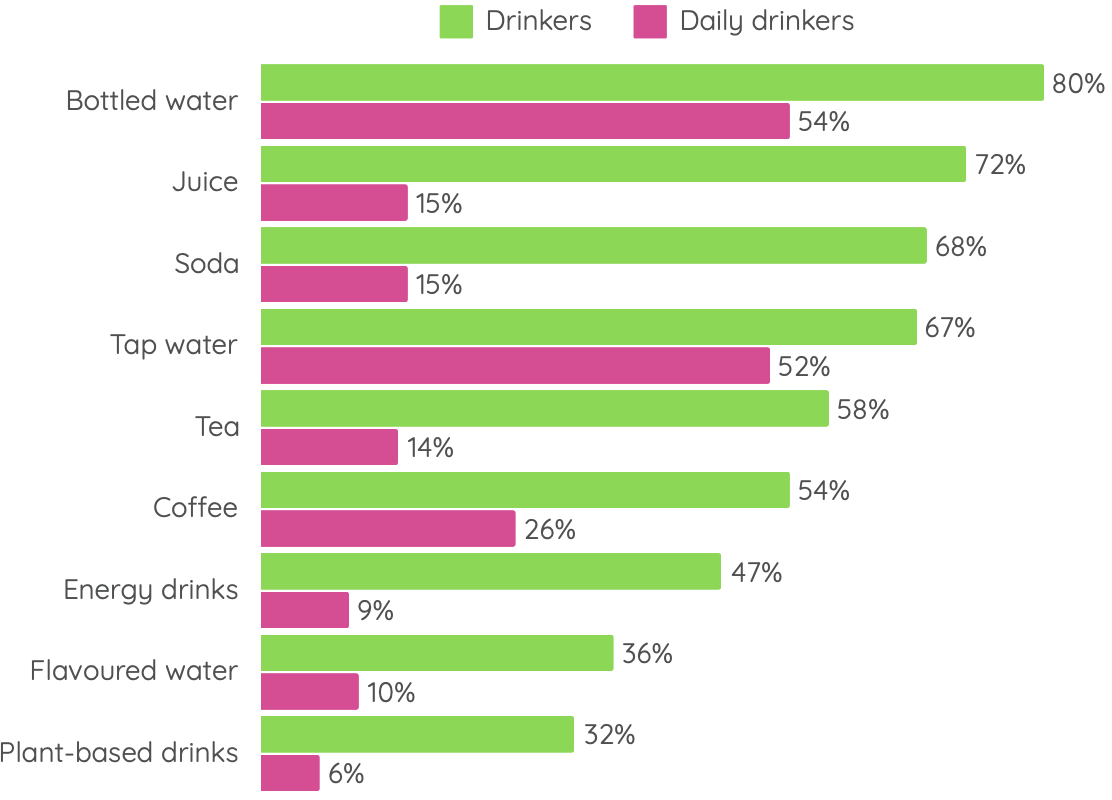
Graph: Opeepl Youth Pulse Study, Wave 3 (Q3, 2024)
Sustainability Matters for Young Consumers - But So Does Convenience
Young consumers seem to place significant importance on sustainability when making purchases. According to the research, 51% of youth are willing to spend more for sustainable beverage options, with an average willingness to pay 6% more for such products.
Despite sustainability concerns, plastic bottles remain the dominant choice for bottled water. 65% of young consumers express a preference for water in plastic bottles, signalling the importance of convenience. Glass bottles are youth's second choice for water, with 28% preferring them. Cartons are the preferred packaging for juice, favoured by 48% of young consumers. Meanwhile, 42% prefer soda in cans, while an even higher 70% opt for cans when buying energy drinks. Plastic bottles remain the second-choice packaging for both juice and soda.
Willingness to Pay More for Sustainable Beverages among Youth
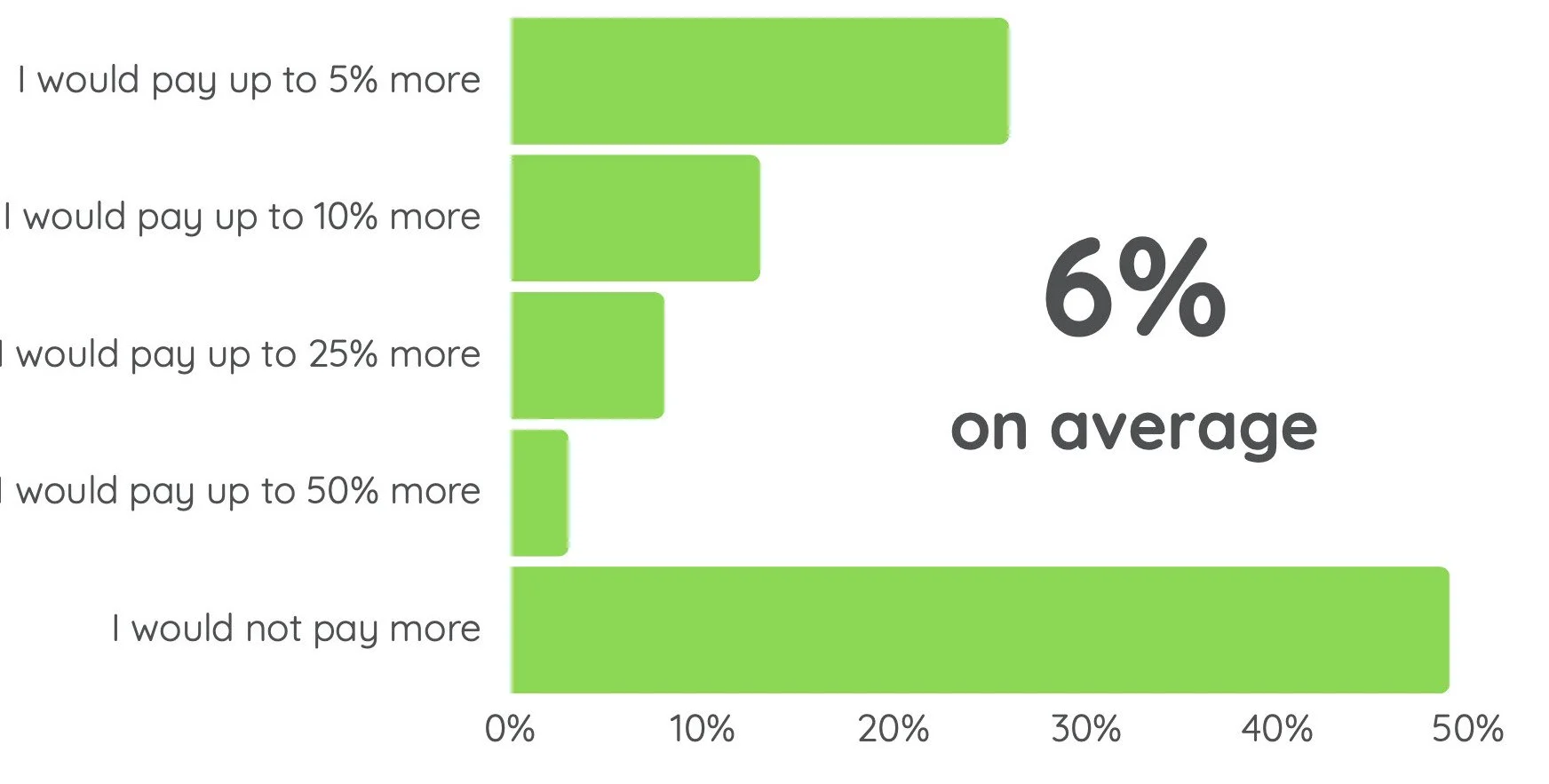
Graph: Opeepl Youth Pulse Study, Wave 3 (Q3, 2024)
Youth Balances Physical Stores and Online Convenience
Despite the growth of e-commerce, brick-and-mortar stores still dominate the market, capturing 76% of non-alcoholic beverage sales. Interestingly, 4% of young consumers purchase beverages exclusively online, while 20% use a combination of online and physical stores. Across EU5 countries, online shopping is most popular among British youth, with 34% buying beverages online, while least popular among Spanish youth, at just 15%.
The appeal of online platforms lies in their ability to provide convenient access to detailed product information, enabling informed choices that reflect health and sustainability priorities.
Where Youth Buy Non-Alcoholic Beverages
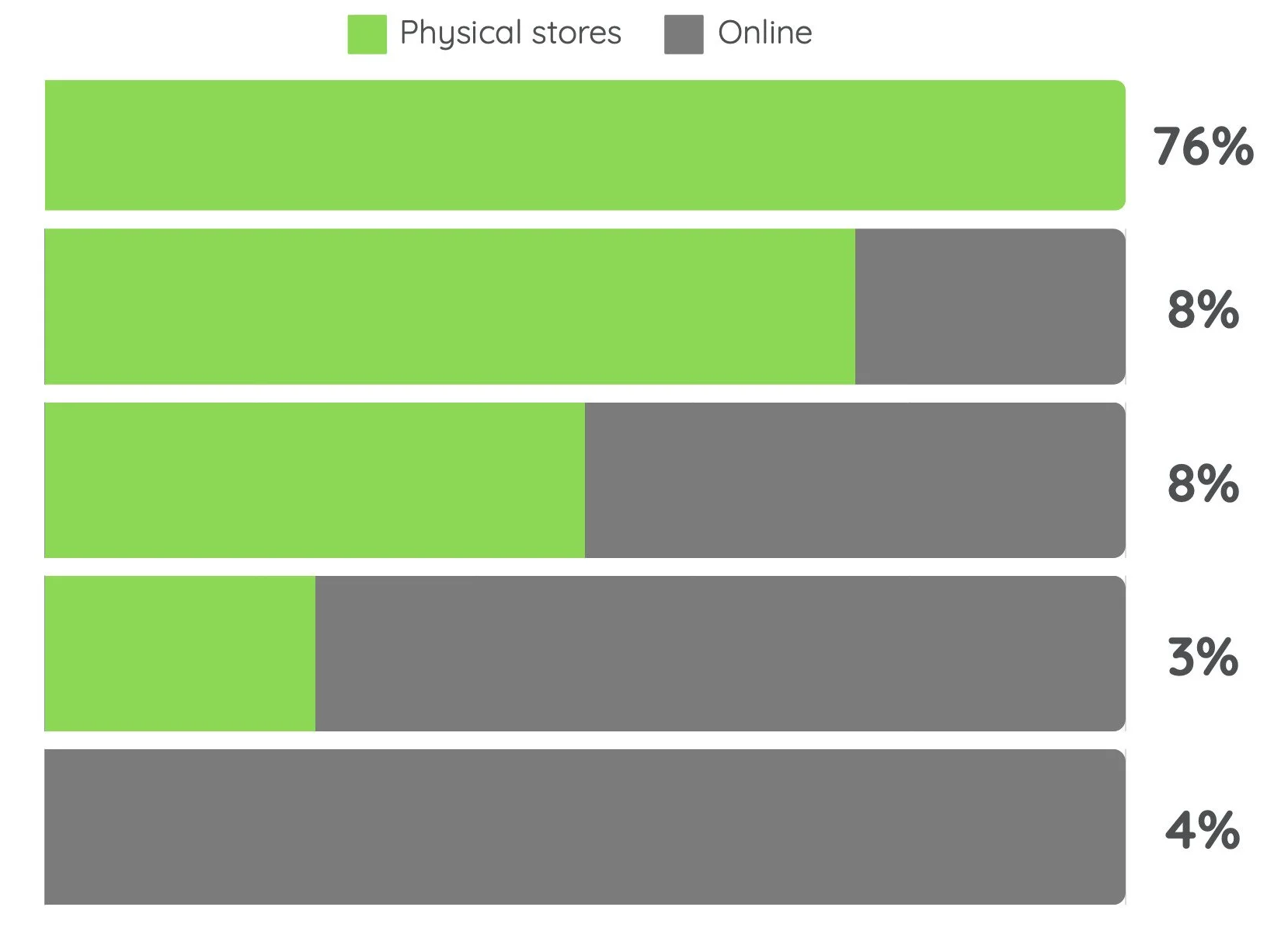
Graph: Opeepl Youth Pulse Study, Wave 3 (Q3, 2024)
Recipe for Success: The Future of the Beverage Market
Youth’s beverage preferences reflect a balance of flavour, health, sustainability, and convenience. While taste and price remain significant factors, there is growing interest in healthier and innovative beverage options that offer added benefits. Sustainability plays a role in young consumers' beverage choices, but convenience remains a priority, with physical stores still leading in beverage sales.
Looking ahead, we can expect several key trends to shape the future of the non-alcoholic beverage industry among Gen Z and younger millennials:
A growing demand for fortified and functional beverages with added health benefits
Increased focus on sustainability without compromising convenience
The need for brands to maintain a strong presence both online and in physical stores
A shift toward ingredient-conscious, health-forward drinks - zero-sugar, mood-boosting, and ingredient-transparent
Understanding and adopting these preferences is crucial for brands to meet young consumers’ needs and stay relevant in the evolving beverage market. The future of beverages is healthier and smarter - and Gen Z and younger millennials are leading the way. As these trends shape the industry, brands that innovate and align their products with youth’s expectations will be well-positioned to maintain a competitive edge.

Discover more trends among 15-30 y.o. in Youth Pulse Report
Opeepl Youth Pulse is a bi-annual study that keeps pulse on the latest developments in the youth market. Discover key youth trends in consumer confidence, media habits, attitudes, values, and four major categories: Food, Beverages, Fashion, and Personal Care.