

Causes Young Consumers Care About in 2026: Mental Health to Microplastics
Updated: July, 2026
Published: September, 2025
Gen Z and younger millennials are settling into a clear set of priorities, and Opeepl's Youth Pulse study brings that into sharper focus than ever. Across Germany, France, Italy, Spain and the UK, our research points to a pattern that has been building for some time: personal wellbeing is steadily pulling ahead of social and environmental causes, rather than converging back towards them. The latest research wave also introduces a brand-new line of questioning on microplastics, giving an early read on how a fast-emerging environmental issue is landing with the younger demographics.
Unless otherwise noted, data in this article reflects Wave 5 of our Youth Pulse Study (Q1 2026), covering 15–30 year olds. Some sections Wave 3 (Q3 2024), which covered a slightly narrower age group of 15–27 year olds.
Mental Health Is The #1 Priority For Young Consumers
Taking care of mental health is the top cause for 15-30 year olds, with 65% ranking it among their top two priorities, just ahead of having a good work-life balance (63%), eating healthy (60%) and being physically active (56%). Doing work that matters, at 48%, is the first social cause of the list followed by animal wellbeing (44%), being inclusive (37%), sustainable consumption (35%), supporting gender equality (34%), and being up to date on political discussions (23%), which remains the least important cause for Gen Z and younger millennials.
Comparing this to Q3 2024 and Q2 2025 shows how settled this hierarchy has become. Mental health and eating healthy both made large jumps between Q3 2024 and Q2 2025, then plateaued exactly at their Q2 2025 levels in Q1 2026. Social causes, by contrast, are still drifting downward: gender equality has now fallen in two consecutive waves.
| Cause | Wave 3 (Q3 2024) | Wave 4 (Q2 2025) | Wave 5 (Q1 2026) |
|---|---|---|---|
| Personal Causes | |||
| Taking care of mental health | 56% | 65% | 65% |
| Having a good work-life balance | 61% | 63% | 63% |
| Eating healthy | 50% | 59% | 60% |
| Being physically active/doing sports | 53% | 57% | 56% |
| Social Causes | |||
| Doing work that matters | 40% | 49% | 48% |
| Animal wellbeing | 48% | 44% | 44% |
| Being inclusive (e.g., ethnicity, religion) | 35% | 37% | 37% |
| Sustainable consumption | 32% | 36% | 35% |
| Supporting gender equality | 38% | 36% | 34% |
| Being up to date on political discussions | 21% | 22% | 23% |
Source: Opeepl Youth Pulse Study, Waves 3-5 (Q3 2024 – Q1 2026). Q: "Which of the following causes are important to you?" Figures show the proportion of youth who ranked each cause among their top two priorities.
Causes That Matter Most to Young Consumers: 2024-2026 Development
Reading the table left to right, the personal causes made their biggest gains between Q3 2024 and Q2 2025 (rises of 2 to 9 points each) and have essentially held that ground in Q1 2026, moving by no more than a single point. Animal wellbeing dropped 4 points between Q3 2024 and Q2 2025 and has stayed flat since. Gender equality is the one cause still actively declining, down from 38% to 34% over the years, all of which reinforces the Q1 2026 headline: personal resilience is winning out over social engagement, and that gap is widening rather than closing.
Causes Gen Z And Younger Millennials Care About: Gender Gap

Our research shows a clear gender divide behind mental health, gender equality and physical activity. Young women are more likely than young men to prioritise mental health (38% vs 26%) and gender equality (17% vs 10%), while young men are more likely to prioritise physical activity (34% vs 18%). Physical activity actually has the widest gap of the three at 16 percentage points, ahead of mental health at 12 points and gender equality at 7 points.
Source: Opeepl Youth Pulse Study, Wave 5 (Q1 2026)
Read more about causes that Gen Z and younger millennials care about in our latest Youth Pulse Report
Microplastics As A New Concern
Microplastics are a growing environmental concern, and young consumers are no exception.
86% of Gen Z and younger millennials say they have at least some degree of concern about the environmental impact of microplastics, well above the 6% who say they're not concerned at all. But the intensity of that concern is still building: only 22% describe themselves as significantly concerned, versus 39% who are moderately concerned and 25% slightly concerned. A further 9% say they aren't familiar with the topic at all.
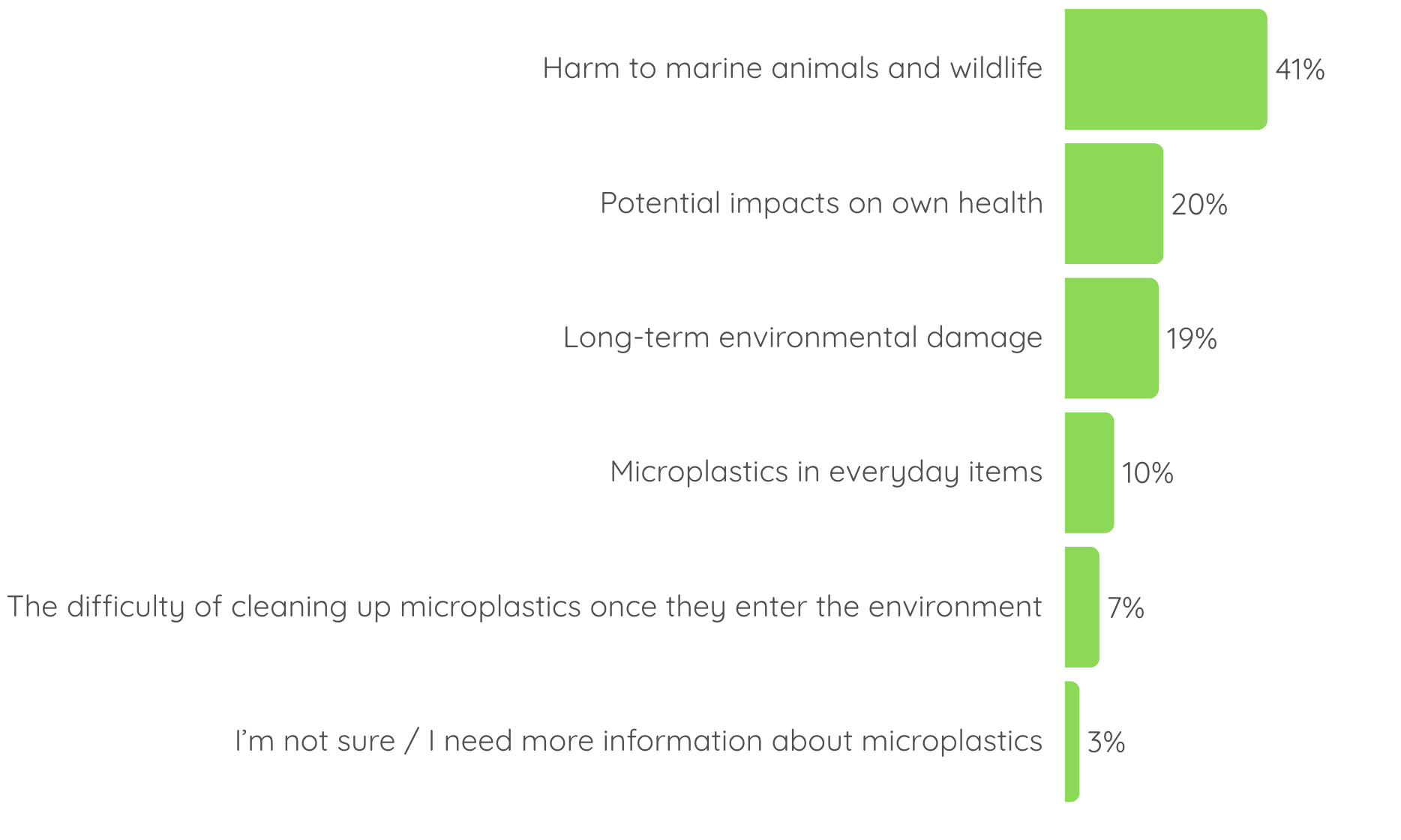
When asked which specific microplastics issue concerns them most, harm to marine animals and wildlife is the runaway top answer at 41%, more than double the next closest concern. Impacts on their own health (20%) and long-term environmental damage (19%) follow closely behind each other, with microplastics in everyday items (10%) and the difficulty of cleaning them up (7%) trailing further behind. Only 3% say they're unsure or need more information, a much smaller uncertainty gap than the 9% who said they weren't familiar with microplastics at all in the previous question, suggesting that once young consumers do engage with the topic, they form a clear view of what worries them fairly quickly.
Top Concerns About Microplastics Among Gen Z and Younger Millennials
Source: Opeepl Youth Pulse Study, Wave 5 (Q1 2026)
Grouped by theme, the picture is even clearer: concerns rooted in harm to the environment and wildlife (marine animals plus long-term environmental damage) account for 60% of responses combined, twice the share of concerns rooted in personal impact (own health plus everyday items, 30% combined). That's a notable contrast with the ranking of the top 10 causes, where Gen Z and younger millennials consistently put their own wellbeing — mental health, physical health, work-life balance — ahead of external or collective concerns. On microplastics specifically, the worry is directed outward, towards wildlife and the environment, rather than inward towards personal health, even though 20% still see a real risk to themselves. 7% are concerned about the difficulty of clean-up and 3% remain unsure about the topic.
Politics Ranks Last as a Cause – But Not When it Comes to American Products
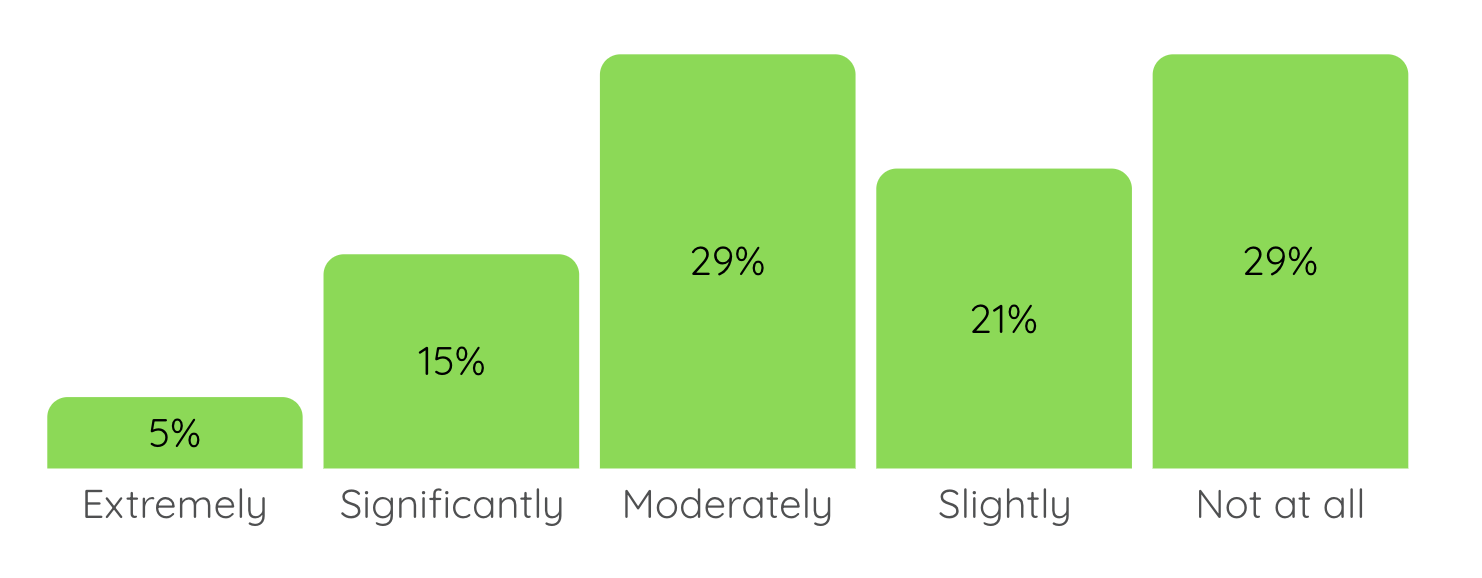
Although staying up to date on political discussions ranks last out of the ten causes for young consumers, our research found that Gen Z and younger millennials are not standing back when it comes to taking a political stand with their wallets: 49% of young consumers in Europe said the political climate influences their decision to purchase American-made products to at least some degree, with 5% saying it influences them "extremely" and 15% "significantly," 29% "moderately," and 21% "slightly." The remaining 29% said it has no influence at all (Opeepl Youth Pulse Study Wave 4, Q2 2025).
Q: To what extent does the current political climate influence your decision to purchase products manufactured in the U.S.?
Source: Opeepl Youth Pulse Study, Wave 4 (Q2 2025)
This question is a useful reminder that political awareness ranking last as a stated "cause" doesn't mean young consumers are politically disengaged in practice, it shows up in purchasing decisions even when it doesn't show up in the causes people say matter most to them.
What This Means for Brands
Gen Z and younger millennials are settling into a clear hierarchy: personal wellbeing first, social causes second, and that gap is holding rather than closing. Microplastics is an issue with broad but still-shallow awareness that brands would be wise to watch rather than over-invest in just yet. For brands, the practical takeaway is the same across both threads: lead with personal wellbeing to reach this audience directly, and treat sustainability and emerging environmental concerns like microplastics as areas to meet 15–30 year-olds where they already are, through easy, everyday actions, rather than assuming a depth of commitment the data doesn't yet support.

Discover more trends among 15-30 y.o. in Youth Pulse Report
Opeepl Youth Pulse is a bi-annual study that keeps pulse on the latest developments in the youth market. Discover key youth trends in consumer confidence, media habits, attitudes, values, and four major categories: Food, Beverages, Fashion, and Personal Care.