

What Matters Most to Youth in 2026, From Mental Health to Microplastics
Published: April, 2026
Europe’s youth are not just evolving, they are redefining priorities in real time.
The latest Youth Pulse Wave 5 data shows a generation that is shifting away from traditional markers of success and moving toward something more personal, more grounded, and more complex. At the center of this shift is a clear tension: balancing self-preservation with social responsibility.
Mental Health is Reshaping Everything Around It
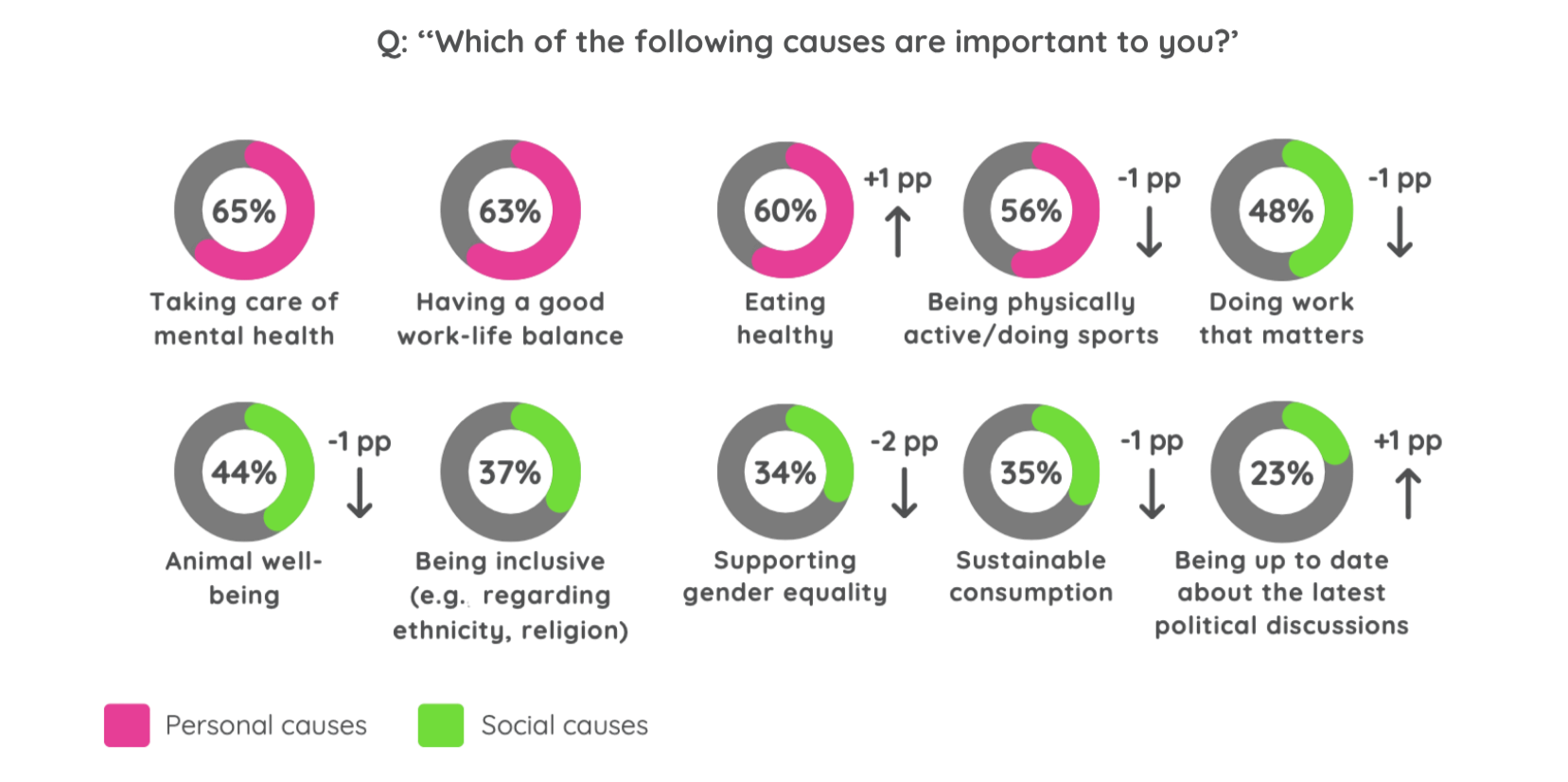
Taking care of mental health is the clear #1 priority for youth since Wave 4 (April 2025), with 65% of young consumers ranking it among their top two causes.
But what makes this particularly significant is not just its position, it is the gap it creates.
Work-life balance follows closely at 63%
Healthy eating at 60%
Physical activity at 56%
This hierarchy tells a deeper story.
Youth are not rejecting ambition, but they are redefining its conditions. Work, productivity, and success are still important, but only if they support mental stability, not compromise it.
Even more interesting is the gender dynamic. A significantly higher proportion of females rank mental health as a top priority compared to males. This suggests that the conversation around wellbeing is not just widespread, but unevenly experienced, requiring more nuanced approaches.
Beyond the Self: Social Causes Still Matter, But Differently
Looking at the broader list of causes, social issues remain firmly present, but they occupy a secondary layer of importance.
Doing work that matters: 48%
Animal wellbeing: 44%
Inclusivity: 37%
Gender equality: 34%
Sustainable consumption: 35%
Political awareness: 23%
The drop from 65% for mental health to 35% for sustainability is not accidental.
It reflects a shift in mindset:
Young consumers are not disengaged from societal issues, but they are prioritising personal resilience first.
In other words, you cannot expect a generation to fix the world if they are struggling to feel balanced within it.
Source: Opeepl Youth Pulse Study, Wave 5 (February 2026)
Sustainability Means Doing, Not Believing
While 35% of youth say sustainable consumption is an important cause, the way they define it is far more revealing than the number itself.
The most common interpretations are highly practical:
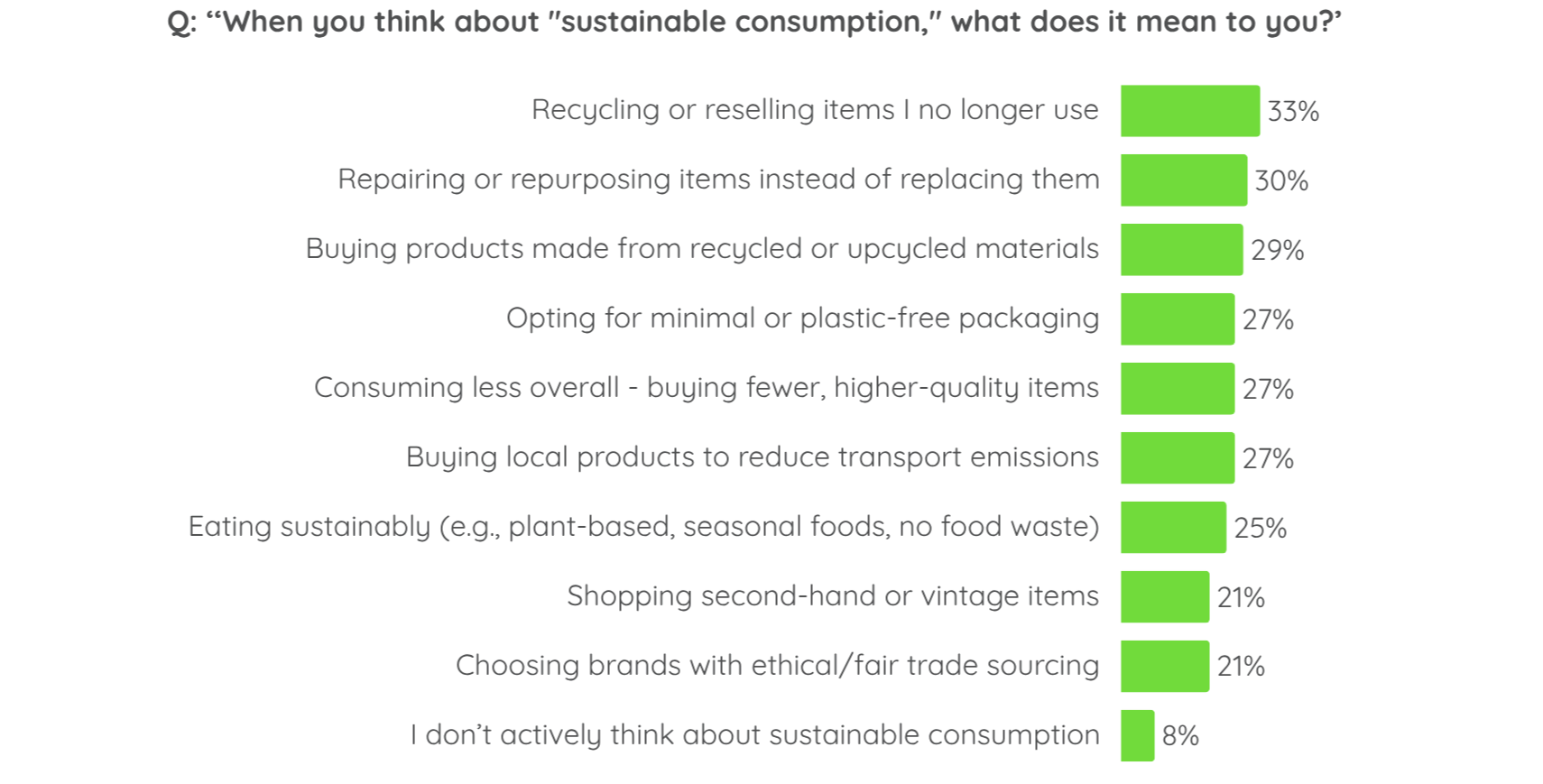
33% associate it with recycling or reselling items
30% with repairing or repurposing
29% with buying recycled or upcycled products
27% with minimal or plastic-free packaging
27% with consuming less overall
27% with buying local
Less prominent, but still relevant:
Sustainable eating, 25%
Second-hand shopping, 21%
Ethical sourcing, 21%
Only 8% say they do not actively think about sustainability.
This is a crucial insight.
Sustainability is no longer about awareness, it is about execution.
Source: Opeepl Youth Pulse Study, Wave 5 (February 2026)
Discover more about personal and social causes among youth in our latest Youth Pulse Report
Microplastics: High Awareness, Moderate Urgency
When it comes to environmental concerns, microplastics stand out as a topic with broad awareness but varying intensity.
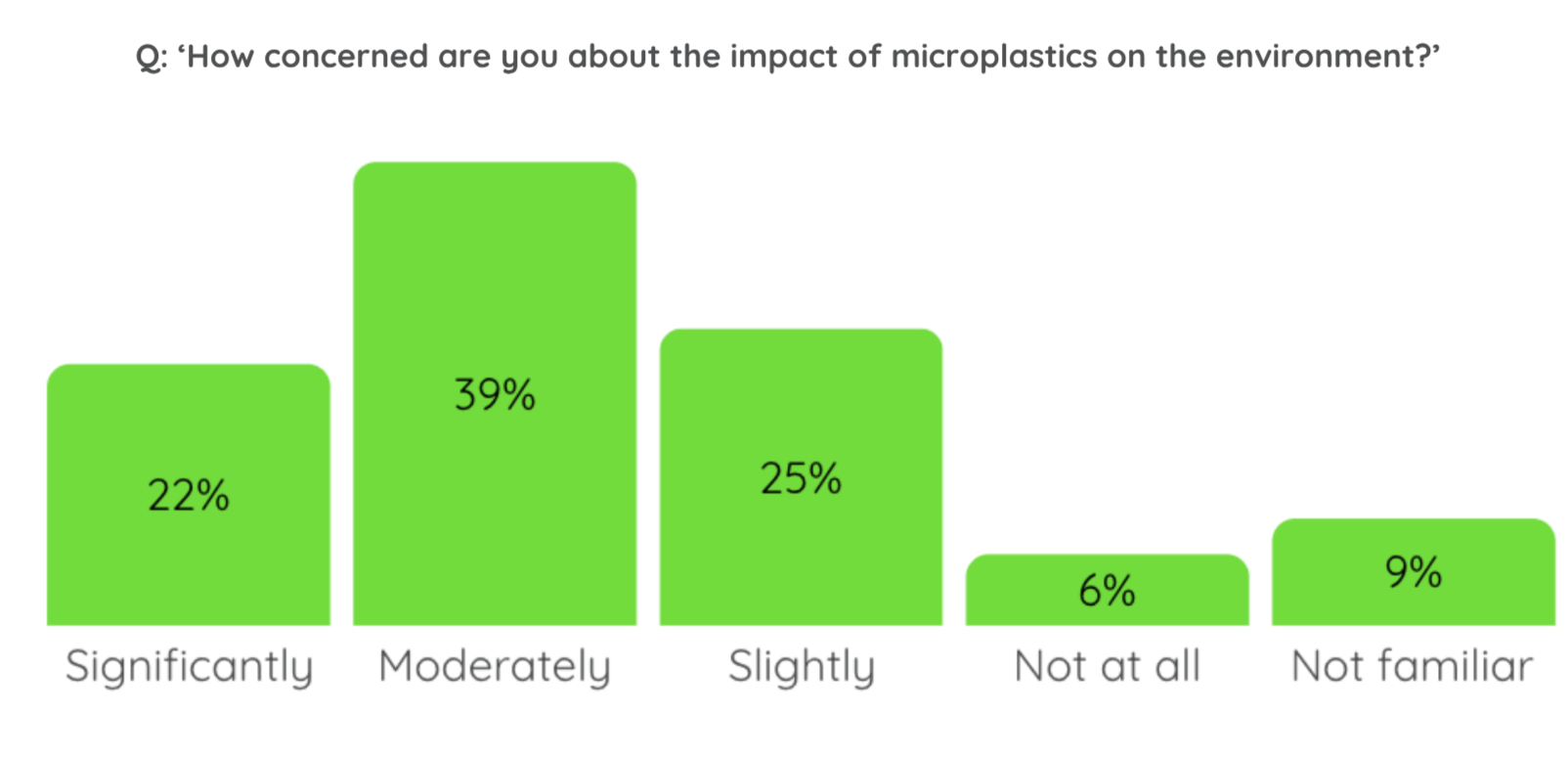
22% are significantly concerned
39% moderately concerned
25% slightly concerned
This means 86% of youth have at least some level of concern .
At the same time:
6% are not concerned at all
9% are not familiar with the issue
This distribution is important.
It shows that microplastics have successfully entered mainstream awareness, but they have not yet reached full emotional urgency.
For comparison, issues like mental health show both high awareness and high prioritization. Microplastics, instead, sit in a more emerging concern space, where knowledge exists but depth of understanding is still forming.
Source: Opeepl Youth Pulse Study, Wave 5 (February 2026)
What Actually Worries Youth About Microplastics
When asked to identify their biggest concerns, youth responses reveal a clear focus.
The top concern is:
Harm to marine animals and wildlife, 41%
Followed by:
Potential impacts on personal health, 20%
Long-term environmental damage, 19%
Microplastics in everyday items, 10%
Difficulty of cleanup, 7%
This split is highly revealing.
Environmental concern is no longer purely altruistic. It is becoming self-relevant.
The fact that personal health concerns rank equally with environmental harm signals a shift from abstract climate anxiety to direct, tangible risk perception.
At the same time, 3% saying they are unsure or need more information indicates that a small knowledge gap remain.
A Generation Redefining Balance
Across all these themes, one pattern becomes clear.
Youth today are not disengaged. They are not indifferent. They are prioritising differently.
They are:
Putting mental health and wellbeing first
Engaging with sustainability through everyday actions
Developing awareness of environmental risks like microplastics
Balancing personal needs with societal expectations
But they are doing so in a way that is pragmatic, not idealistic.
They are not asking for perfection.
They are looking for control, clarity, and balance.

Discover more trends among 15-30 y.o. in Youth Pulse Report
Opeepl Youth Pulse is a bi-annual study that keeps pulse on the latest developments in the youth market. Discover key youth trends in consumer confidence, media habits, attitudes, values, and four major categories: Food, Beverages, Fashion, and Personal Care.