
Emerging Non-Alcoholic Beverage Trends 2025
Published: December, 2025
Non-alcoholic beverages have transformed far beyond classic soft drinks and bottled water. For young consumers in 2025, what they drink is a reflection of their health goals, values, and even their identity. According to Youth Pulse Wave 4 report, 15–30-year-olds are choosing beverages with more intention than ever before.
They care about ingredients.
They care about function.
And above all, they care about how a drink makes them feel.
This isn’t a passing trend. It’s a cultural shift.
Primary Health Concerns When Buying Beverages
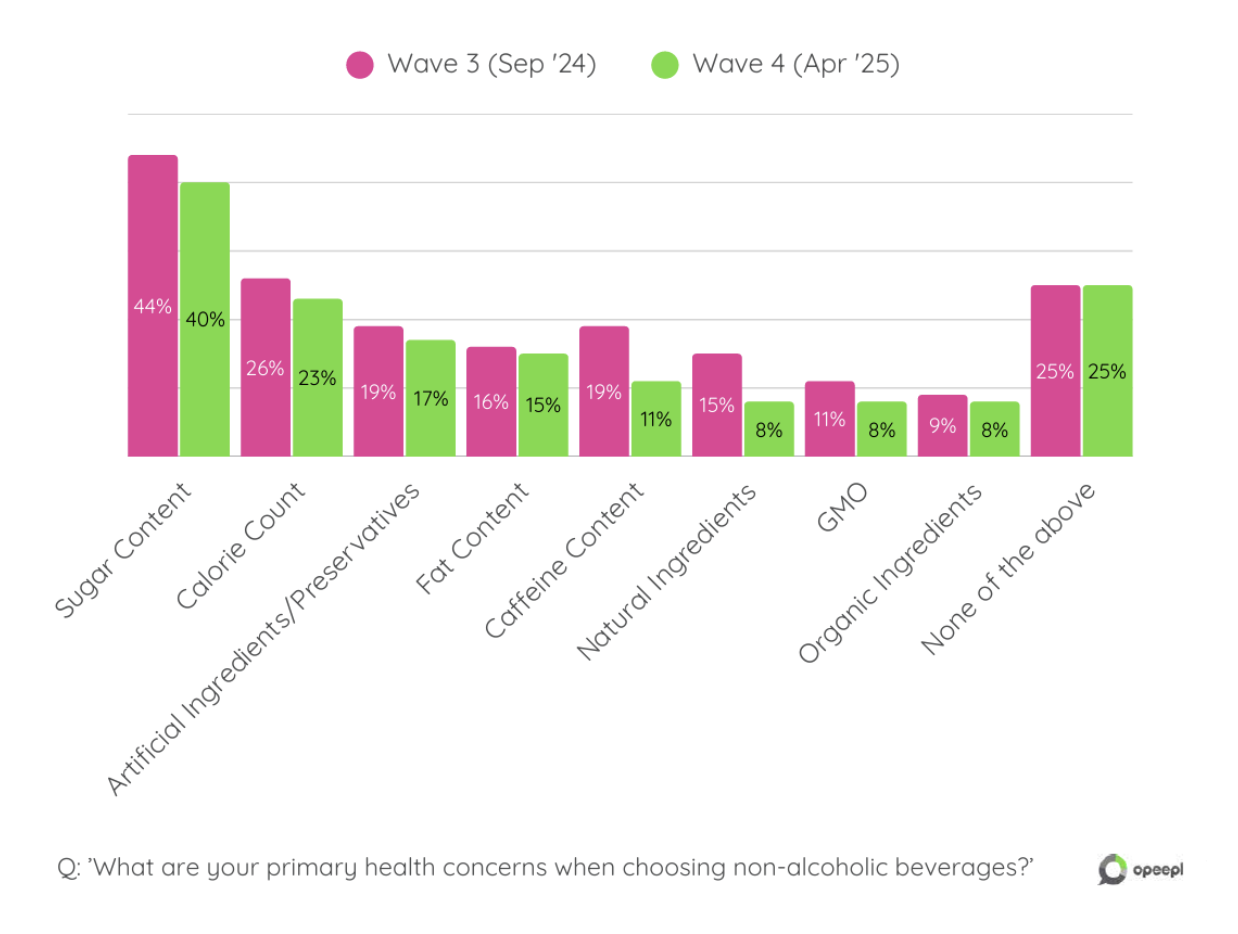
One finding in the report stands out clearly: sugar content remains the #1 concern when young people buy beverages.
40% of youth worry about sugar content when choosing non-alcoholic beverages, while 23% are concerned about calorie count.
Additional concerns include:
Artificial ingredients/preservatives follow at 23%
Fat content sits at 19%
Natural ingredients matter to 15%
Only 8% worry about GMOs or organic sourcing
While sugar concern has dipped slightly (from 44% to 40%), it still dominates decision-making.
The message is clear:
Youth want sweetness without the health compromises. They’re reading labels, comparing brands, and rejecting drinks loaded with sugar or artificial additives. Checking sugar content is becoming second nature for this generation.
The Rise of Fortified Beverages
Today’s youth want drinks that do more than quench thirst. They want beverages that support energy, skin health, immunity, digestion, and even mood.
Here’s what they look for most:
Added vitamins – 40% (+3pp)
Added minerals – 23% (–3pp)
Added protein – 23% (+2pp)
Added collagen – 15% (+4pp)
Antioxidants – 13%
Probiotics – 12%
This aligns with the broader wellness movement:
A smoothie isn’t “just a smoothie.”
Coffee isn’t “just coffee.”
Even water is now fortified with electrolytes, adaptogens, or brain-boosting ingredients.
Functional beverages are becoming a lifestyle staple.
10 Beverage Trends to Watch in 2025
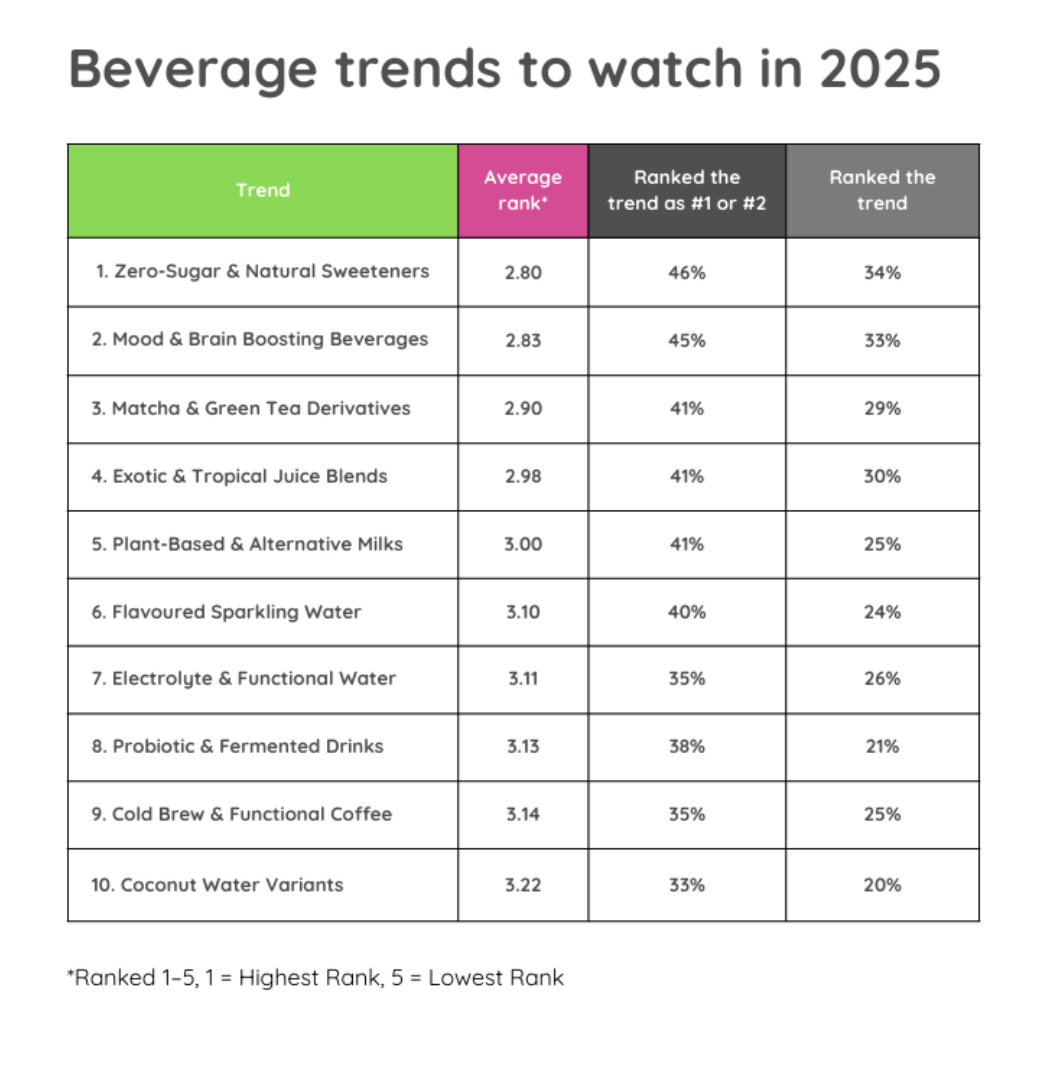
Youth Pulse Wave 4 reveals the 10 biggest beverage trends shaping the category this year. Let’s break them down.
1. Zero-Sugar & Natural Sweeteners
Avg. rank: 2.80 | #1 or #2 ranking: 46%
Youth are rejecting both sugar and artificial sweeteners, but they still want sweetness. Stevia, monk fruit, and other natural options are driving this shift. “Healthy sweetness” is becoming the new normal.
2. Mood & Brain Boosting Beverages
Avg. rank: 2.83 | #1 or #2 ranking: 45%
Mental health matters, and it affects beverage choices. Drinks that support focus, relaxation, or stress relief are growing fast. Magnesium drinks, nootropics, L-theanine teas: mental wellbeing now shapes beverage choices.
3. Matcha & Green Tea Derivatives
Avg. rank: 2.90 | 41% top ranking
Matcha has become a daily staple for many youth. They love its natural caffeine, antioxidants, and visual appeal. It’s where health meets aesthetics.
4. Exotic & Tropical Juice Blends
Avg. rank: 2.98 | 41% top ranking
Flavours like lychee, mango, passionfruit, guava, and calamansi are becoming mainstream. Youth are hungry for global taste experiences.
5. Plant-Based & Alternative Milks
Avg. rank: 3.00 | 41% top ranking
Oat, almond, soy, coconut, and even pea-based milks are expected on shelves. Driven by sustainability, gut health, and versatility.
6. Flavoured Sparkling Water
Avg. rank: 3.10 | 40% top ranking
A bubbly, sugar-free upgrade to soda. Youth love the lightness and variety.
7. Electrolyte & Functional Water
Avg. rank: 3.11 | 35% top ranking
Hydration with added benefits. A go-to for gym sessions, travel, and late nights.
8. Probiotic & Fermented Drinks
Avg. rank: 3.13 | 38% top ranking
Gut health remains a major driver. Kombucha, kefir, and prebiotic sodas feel both healthy and premium.
9. Cold Brew & Functional Coffee
Avg. rank: 3.14 | 35% top ranking
Youth crave coffee, but with innovation. Ready-to-drink, protein-enhanced, and adaptogen-infused formats lead the way.
10. Coconut Water Variants
Avg. rank: 3.22 | 33% top ranking
Coconut water has gone from niche to habit. Now it's available in flavoured, sparkling, and functional-infused forms, making it a go-to hydration choice.
What This Means for Beverage Brands
Youth are reshaping the non-alcoholic beverage market in a big way. They want drinks that taste good, fit their health goals, and feel natural. Artificial sweeteners and heavy sugars turn them away, while clean labels and real ingredients pull them in.
Functional benefits matter too; if a drink can boost mood, support focus, or improve hydration, it stands out. Young consumers also want products that feel modern and exciting, not boring or traditional. And if a beverage doesn’t meet these expectations, they won’t hesitate to choose something else.
The future of beverages is healthier, smarter, and more personalised, and young consumers are leading the way.
Watch Our Webinar
Want to learn more about how young consumers are transforming the beverage market? Watch our on-demand webinar: Youth Beverage Trends to Watch in 2025

Discover more trends among 15-30 y.o. in Youth Pulse Report
Opeepl Youth Pulse is a bi-annual study that keeps pulse on the latest developments in the youth market. Discover key youth trends in consumer confidence, media habits, attitudes, values, and five major categories: Food, Beverages, Alcohol, Fashion, and Personal Care.